What Makes Norweco Singulair Green a Smart Investment in Wantage NJ
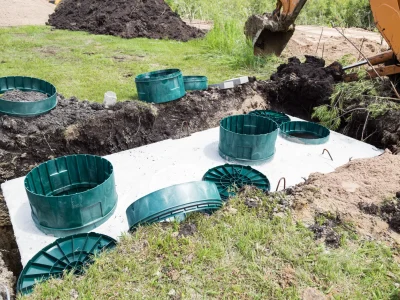


For homeowners in Wantage, wastewater is not an abstract utility hidden behind a monthly bill. It is a property system, a maintenance responsibility, and in many cases a long-term financial decision. That changes the way people should think about septic upgrades. A conventional system may seem familiar, but familiarity is not always the same thing as value. In the right setting, an advanced treatment unit can solve site limitations, improve treatment quality, and protect the kind of property investment that matters in a rural township.
That is where the conversation around norweco singulair green Wantage NJ becomes practical rather than theoretical. People look at systems like the Norweco Singulair Green because they are trying to answer real questions. Can this lot support a replacement system? Will this approach reduce strain on the drainfield? What does it mean for future repairs, permits, and resale? Is the higher upfront cost worth it over time?
A smart investment is rarely defined by purchase price alone. It comes down to performance, lifespan, regulatory fit, maintenance realities, and whether the system makes ownership easier instead of harder. In Wantage, where many homes rely on onsite wastewater treatment and where site conditions can vary dramatically from one parcel to the next, those factors deserve close attention.
Why septic decisions carry more weight in Wantage
Wantage has the kind of rural and semi-rural housing pattern that makes septic performance central to everyday property ownership. If you are on a private well and a private septic system, wastewater treatment is not one line item among many. It is part of the health, usability, and insurability of the home.
Local conditions often complicate the picture. Some lots have slopes that affect layout options. Some have tight clearances between wells, property lines, driveways, and existing structures. Others deal with soils that do not perk as easily as an owner hopes, or with seasonal moisture that makes a standard drainfield design harder to place. These are the situations where advanced treatment starts to make economic sense.
A homeowner may first react to the phrase "advanced treatment unit" as if it automatically means "more expensive." That is true at the installation stage in many cases. What is often missed is the cost of trying to force a basic approach onto a norweco singulair green Wantage NJ Excavating New Jersey LLC difficult site. Once you start talking about major excavation, oversized fields, engineering workarounds, or repeated repairs to an underperforming system, the initial savings can disappear quickly.
I have seen this in rural markets many times. A family buys a beautiful property because the house looks solid and the lot feels spacious. Then the septic inspection raises concerns, or a failure appears not long after move-in. Suddenly the issue is not just the tank. It is the lack of room for a simple replacement, the challenge of meeting setback requirements, and the fear that a very ordinary problem has become a very expensive one. Systems like the Singulair Green enter the conversation because they can create options where conventional designs fall short.
What the Norweco Singulair Green is really offering
The core value of a system like the Norweco Singulair Green lies in treatment quality. Rather than relying only on passive settling and soil treatment, it uses aerobic treatment processes to produce cleaner effluent before it reaches the disposal area. That cleaner effluent can matter a great deal on a constrained property.
In plain language, better pretreatment can reduce the burden placed on the drainfield or other dispersal component. When wastewater reaches that stage with lower organic loading and fewer solids, the downstream part of the system has a better chance to perform properly and for longer. On difficult lots, that is not a minor advantage. It can be the difference between a feasible project and a dead end.
This is one reason the Norweco name comes up often when people are discussing replacements or new installations where treatment standards and site limitations both matter. The system is not a magic box. It still needs correct design, permitting, installation, power, and routine service. But in the right context, it offers a level of treatment that a basic septic tank alone does not.
For a homeowner, that translates into something tangible. You are not just buying equipment. You are buying flexibility in design, a higher level of effluent quality, and in many cases a more durable path to regulatory compliance.
The financial picture is broader than the bid price
The biggest mistake I see with wastewater budgeting is narrowing the comparison too early. A homeowner gets two very different numbers, one for a more basic system and one for an advanced one, and naturally focuses on the gap between them. That comparison is incomplete unless you also ask what each system makes possible.
A less expensive proposal may only work if the lot offers generous space, favorable soil conditions, and uncomplicated setbacks. If those conditions are not present, then the lower number is not a real option. It is a hypothetical one. The more useful question is whether the chosen system solves the actual problem with the least long-term disruption and risk.
With a Norweco Singulair Green, the return on investment can show up in several ways. It may allow a project to move forward on a site where a standard approach would struggle. It may protect the disposal area by delivering better treated effluent. It may reduce the odds of recurring trouble tied to poor treatment performance. It may also help preserve marketability when a property is later sold and buyers or lenders examine the septic setup closely.
A septic system is one of the few major home systems that can trigger five-figure consequences very quickly when it fails. That is why investment logic here should be defensive as well as practical. Spending more upfront to reduce exposure later is not glamorous, but it is often financially sound.
Why cleaner effluent matters so much on real properties
Homeowners often hear technical language about BOD, TSS, and treatment stages, and their eyes glaze over. Fair enough. What matters in practice is what cleaner effluent does for the rest of the system.
When wastewater is better treated before final dispersal, the disposal area is dealing with a lighter load. That can help reduce biomat buildup and stress in the soil interface over time. No legitimate professional should promise that any technology eliminates maintenance or guarantees infinite life, because that is not how onsite wastewater works. Soil still matters. Water use still matters. Service still matters. But better pretreatment is not just a laboratory talking point. It affects real-world durability.
On properties in and around Wantage, this is particularly important because many owners plan to stay put for years. They are not simply trying to get through a transaction. They want a system that can serve a household through changing needs, heavier holiday use, and the normal wear that accumulates over a decade or two. A system with stronger treatment capability starts to look less like an upgrade and more like a form of insurance for the drainfield.
Site constraints often turn advanced treatment into the sensible choice
Not every lot is easy. Some are carved by topography. Some are hemmed in by established landscaping, accessory buildings, pools, or paved areas. Some have old system locations that complicate replacement planning. Others face the challenge of meeting separation distances while protecting both wastewater treatment and drinking water supply.
This is where the value proposition becomes local. In a place like Wantage, broad statements about septic systems do not help much because neighboring properties can behave very differently. One parcel may accept a conventional design without much drama. The next may require more engineered thinking because the lot layout leaves little room for error.
Advanced treatment systems can expand the design conversation. They do not erase local rules or environmental realities, but they can support solutions where cleaner effluent and engineered performance improve the feasibility of the project. For homeowners, that means fewer moments where an installer has to say, "There just isn't enough room to do this the simple way."
That kind of flexibility has a dollar value, even if it never appears as a separate line on the estimate. Avoiding major redesigns, delayed approvals, or land disruption is part of the payoff.
What homeowners are really buying when they choose Norweco
When I speak with property owners about systems in this category, I usually encourage them to think beyond the tank itself. They are purchasing an operating framework. That framework includes treatment, monitoring, service access, and the ability to match a system more closely to the realities of the site.
Here are the benefits that most often justify the investment:
- Higher treatment performance before wastewater reaches the dispersal area.
- Better fit for challenging lots where conventional options may be limited.
- Potential protection for the drainfield through reduced organic and solids loading.
- Stronger long-term property value, especially where septic questions can affect resale.
- A clearer maintenance structure, because advanced systems are typically serviced on a defined schedule rather than ignored until trouble starts.
That fifth point deserves more respect than it usually gets. A standard septic system is often "out of sight, out of mind" until there is an odor, backup, or wet area in the yard. An advanced treatment unit tends to come with a more disciplined service culture. Some owners see that as a drawback because it means routine oversight. In reality, that oversight often catches small issues before they become expensive ones.
The maintenance trade-off is real, and that is not a reason to avoid it
A professional discussion about the Norweco Singulair Green has to include the trade-offs. This is not a passive concrete tank you forget about for years. It is a mechanical treatment system. That means it needs electricity. It needs periodic inspection and service. Components will age. Air delivery and treatment functions need to be maintained.
Some homeowners hear that and immediately lean back toward conventional systems. That reaction makes sense if they are comparing an easy lot with no design limitations and a household that wants absolute simplicity. But on many Wantage properties, simplicity on paper does not produce simplicity in ownership. A "simple" system placed on a marginal or constrained site can become a constant source of worry.
There is a useful distinction here. Mechanical systems require active care. Failed or overloaded conventional systems require emergency care. Most experienced owners would rather pay for predictable service than gamble on unpredictable failure.
That does not mean every owner is equally suited for an advanced system. If someone is unlikely to maintain the unit, ignores service contracts, and treats wastewater infrastructure as an afterthought, then the best technology in the world will not save them from poor habits. Smart investment depends on matching the system to the owner as well as to the property.
How this can affect property value in practical terms
Septic systems influence resale more than many sellers realize. Buyers may not ask detailed wastewater questions at the first showing, but lenders, inspectors, and cautious purchasers often do before the deal closes. If there is uncertainty around capacity, compliance, age, or replacement feasibility, that uncertainty tends to show up in the negotiation.
A well-documented advanced treatment system can strengthen the file. It tells a buyer that the property owner addressed wastewater needs with intention rather than patchwork repairs. If the lot has known constraints, having a system that was designed to address those constraints is far better than leaving a future buyer to wonder whether the next repair will trigger a major redesign.
In markets with many older homes, this matters even more. A charming house with an aging or questionable septic arrangement can lose momentum fast. Buyers are wary of hidden infrastructure costs, and rightly so. A modern, professionally maintained treatment system can remove one of the biggest unknowns in the transaction.
That does not mean every buyer will pay a visible premium for a Norweco unit. Real estate rarely works that neatly. The value often appears in a different form: smoother inspections, fewer objections, less fear, and a stronger position when the septic system comes under scrutiny.
Why local design and installation matter as much as the brand
A strong product can still disappoint if the planning is sloppy. With septic work, brand reputation and field execution must go together. The best investment outcome comes from a system that is properly sized, correctly installed, sensibly located, and supported by ongoing service.
That is especially true when discussing norweco singulair green Wantage NJ. The local context matters. Soil evaluation matters. Hydraulic loading matters. Household occupancy patterns matter. So do setbacks, grading, power supply, and future access for maintenance.
I have seen owners focus heavily on the treatment unit while paying too little attention to the design around it. The result can be frustration with a system that was never the real problem. A treatment unit cannot compensate for chronic hydraulic overloading, poor site drainage, or a disposal area that was not matched to actual use conditions.
This is why homeowners should spend time with the installer or designer asking grounded questions rather than shopping only by bottom-line number.
A short list of smart questions can save a lot of grief later:
- How does this design address the specific limitations of my lot?
- What routine service will the system need, and who will provide it?
- How will this setup protect or extend the life of the disposal area?
- What operating habits should our household change, if any?
- What records should I keep for future resale or inspections?
Those questions shift the discussion from sales language to ownership reality.
The water use factor that many households overlook
No septic system, advanced or conventional, performs well when the house sends more water than the design can comfortably handle. I mention this because some owners install a higher-performing system and assume it can absorb any abuse. It cannot.
Laundry patterns, leaking fixtures, long shower habits, and sudden spikes from guests all influence wastewater systems. The Singulair Green can improve treatment quality, but it is still part of a whole property system. Sensible water use remains part of protecting the investment.
The upside is that better treatment usually gives the owner more resilience than a basic tank-only approach. If a family has busy weekends, visiting relatives, or a home-based business with occasional occupancy swings, stronger treatment capability can offer a cushion. It should not be treated as unlimited capacity, but it can provide practical breathing room compared with a marginal conventional setup.
The environmental angle is not just a talking point
In rural communities, environmental protection often feels personal rather than political. People care about groundwater because they rely on wells. They care about surface water because they live near it, fish in it, or simply do not want to degrade the land around their homes.
That makes advanced treatment easier to understand. Cleaner effluent is not just a spec sheet benefit. It supports better stewardship of the property and surrounding environment. On lots where separation distances and site sensitivity are part of the design challenge, that improved treatment can be a meaningful advantage.
There is also a more self-interested version of this point, and it is entirely reasonable: homeowners benefit when their wastewater system does not create contamination risks for their own water supply or for neighboring properties. Protecting the environment and protecting your investment are often the same act.
When the Singulair Green makes the most sense
This system is not automatically the right answer for every property in Wantage. A straightforward lot with favorable soils and ample room may do perfectly well with a more conventional solution. The Singulair Green tends to shine when the owner needs more than the basics can comfortably deliver.
That usually includes replacement scenarios on constrained lots, homes where drainfield protection is a priority, owners who plan to stay long enough for lifecycle thinking to matter, and situations where better treatment can support permitting or design feasibility. It also appeals to buyers who would rather accept routine service obligations than gamble on uncertain long-term performance from a simpler but less capable setup.
The key is to compare real options, not imaginary ones. If the property can support several viable designs, then cost, maintenance, and owner preference should all be weighed carefully. If the property has meaningful limitations, the Norweco Singulair Green may stop looking like a premium upgrade and start looking like the sensible path.
A durable investment is one that reduces future surprises
The strongest argument for this kind of system is not that it is fancy or modern. It is that it can reduce the number of ugly surprises a homeowner faces later. That matters in a place like Wantage, where septic performance is tied directly to daily life, property usability, and long-term ownership cost.
A failing or marginal wastewater system can force rushed decisions at the worst possible moment, often during a home sale, after a backup, or when weather and site conditions are least favorable for construction. Planning ahead with a system designed for stronger treatment and site flexibility can prevent that scramble.
For homeowners weighing norweco singulair green Wantage NJ, the smartest lens is not sticker shock. It is total ownership value. If the system fits the site, protects the disposal area, supports compliance, and is maintained correctly, the investment can pay for itself in stability, avoided trouble, and preserved property value.
That is norweco singulair green Wantage NJ what smart septic spending looks like. Not the cheapest path on bid day, but the one that continues to make sense when the years start adding up.
Excavating New Jersey LLC
406 County Rd 565
Wantage, NJ 07461, United States
Phone: +1 (973) 791-4284
FAQ About norweco singulair green Wantage NJ
How does a Norweco septic system work?
Singulair Green uses aerobic biological treatment in a polyethylene tank, followed by settling and filtration. The treatment unit is one part of a complete wastewater system; the site design also determines how treated effluent is dispersed.
How much does a Norweco septic system cost in NJ?
A useful estimate requires a property evaluation. Excavation access, soil conditions, engineering, electrical work, the disposal field, and restoration can affect the total. Ask Excavating New Jersey LLC for a written scope that distinguishes installation costs from ongoing service costs.
Are Norweco septic systems good?
Singulair Green is an established aerobic treatment option, but suitability depends on the property and proposed design. Compare the model's documented performance, maintenance needs, and total project scope with alternatives before deciding.